Orthodontic, Endodontic & Restorative
Orthodontic Instruments
Pliers, cutters and auxiliaries for fixed orthodontic appliances. MOQ: 50 units / SKU.
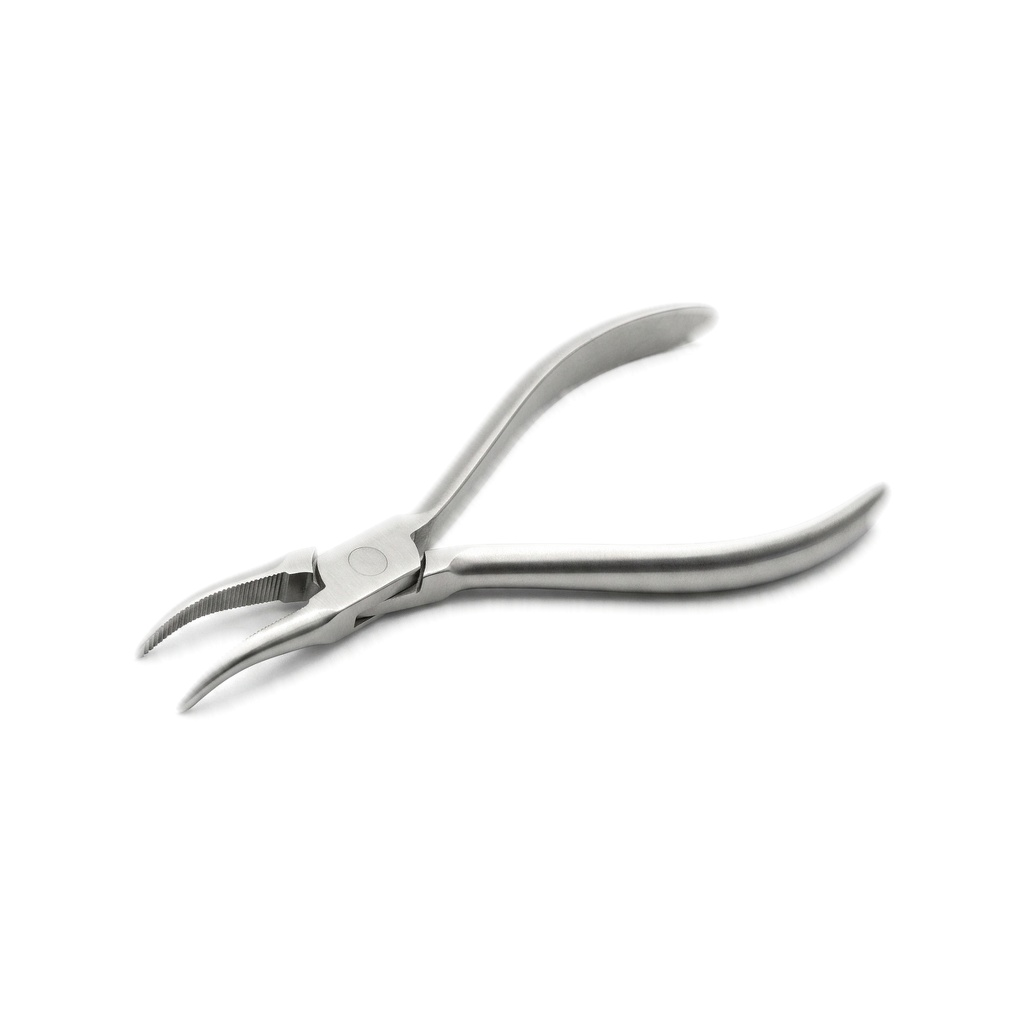
Weingart Utility Pliers
SKU: DOP-601The orthodontist's everyday utility pliers, used to grip, guide and seat archwires into brackets and molar tubes. The slender, angled beaks are finely serrated so a wire is held firmly without slipping or scoring, and the angled form keeps fingers clear of the working area. Forged stainless steel keeps the beaks aligned through years of daily use. At 140 mm they are compact in the hand and steam autoclavable at 134°C.
DOP-601 | 140 mm (5.5") | Forged stainless steel | Sterilisation: Steam autoclave 134°C
Range 3 — Orthodontic, Endodontic & Restorative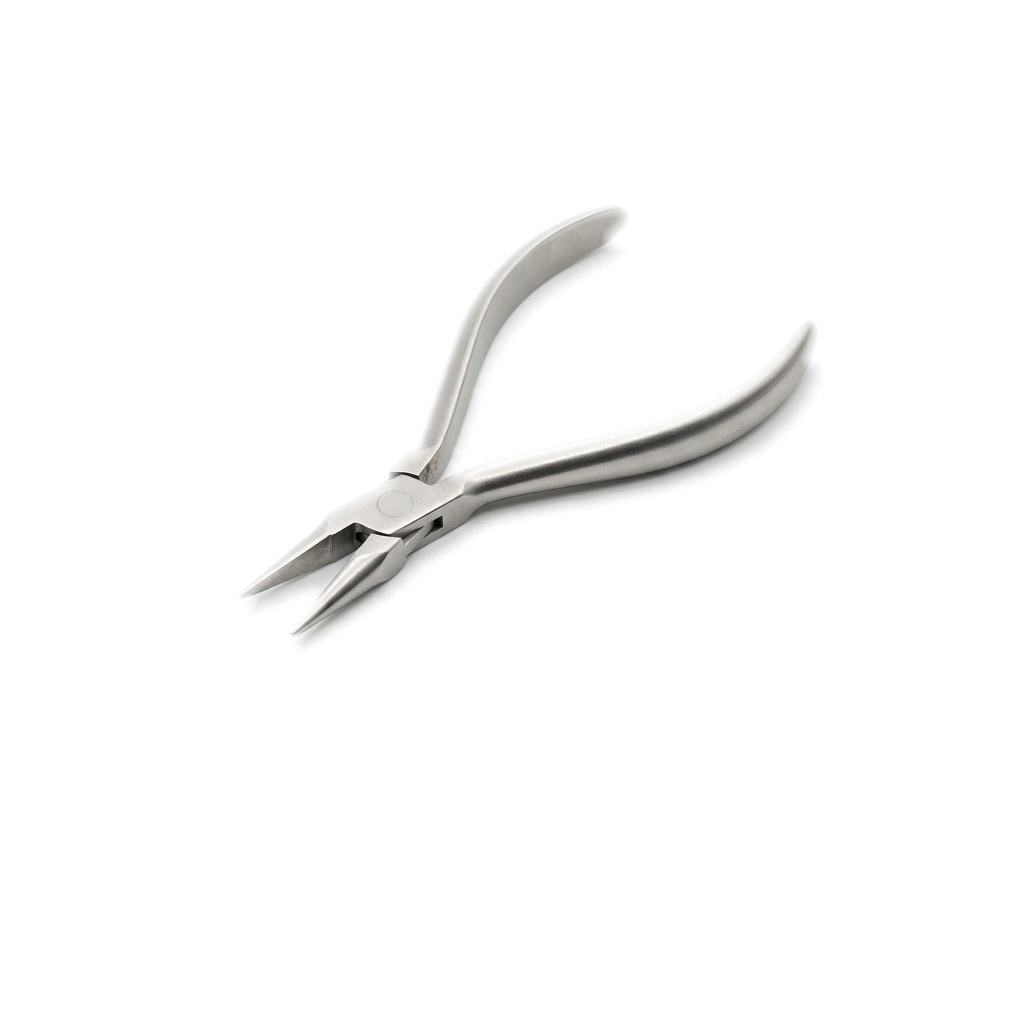
Bird Beak Pliers #139
SKU: DOP-139Classic loop-forming pliers with one round, conical beak and one square, pyramid-shaped beak — the combination that makes clean, repeatable bends in orthodontic archwires. Wires can be wrapped around the round beak for smooth loops and finished against the flat beak for sharp detail bends. Forged and hardened steel keeps the beak surfaces smooth so wires are not nicked. They measure 135 mm and are autoclavable at 134°C.
DOP-139 | 135 mm | Forged hardened steel | Sterilisation: Steam autoclave 134°C
Variants: Variants & sub-products: Light Wire Pliers Pattern — Longer, more delicate beaks for finer wires and detailed bends in finishing stages. · Three-Prong (Aderer) Pliers Pattern — Three rounded prongs that bend wires without removing them from the mouth, handy for in-situ adjustments. · Loop-Forming (Tweed) Pliers Pattern — A beak shaped specifically for omega loops and consistent loop geometry in archwire finishing.
Range 3 — Orthodontic, Endodontic & Restorative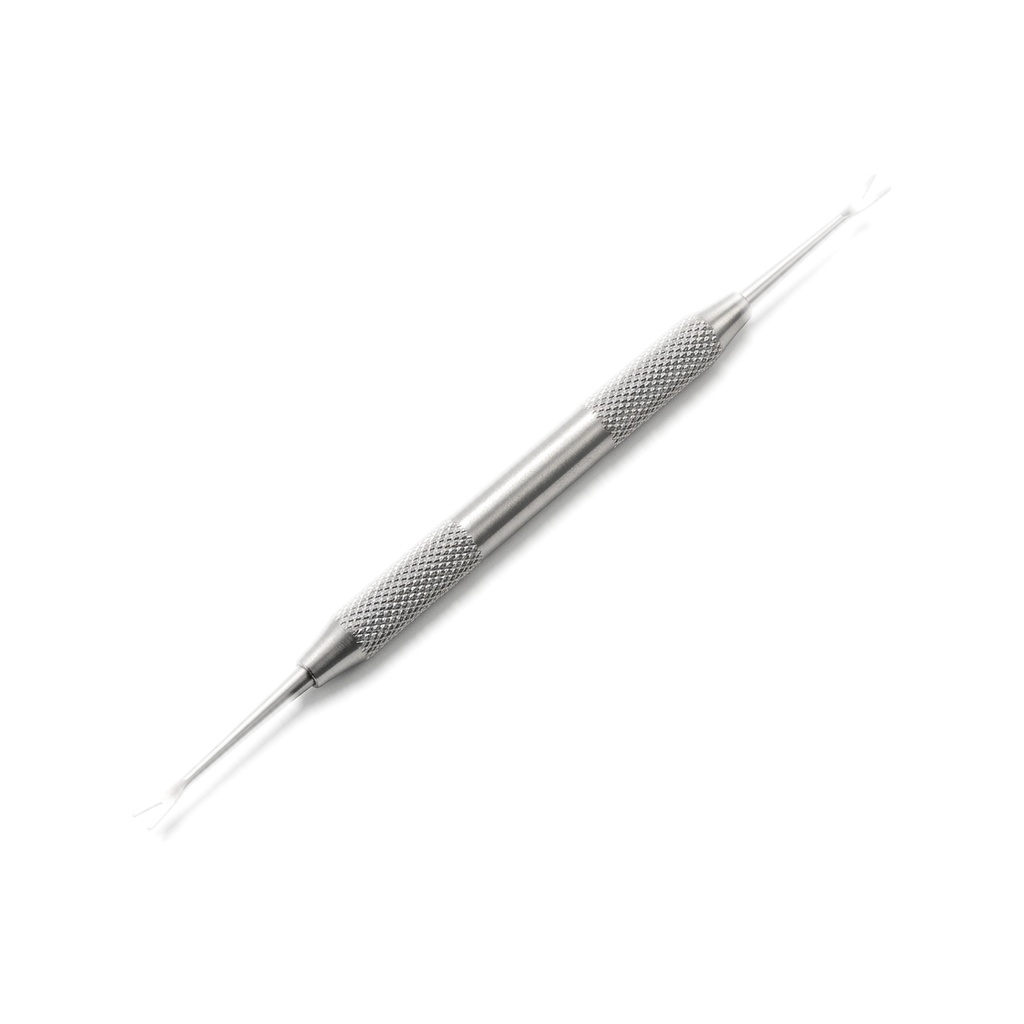
Ligature Director & Band Pusher
SKU: DLD-150A double-ended orthodontic hand instrument for the finishing touches of a bonding appointment: one end tucks wire ligature ends safely under the archwire, and the other seats molar bands firmly onto the tooth. The forked, notched tips engage ligature pigtails positively so they do not spring back and irritate the cheek. At 165 mm in AISI 304 stainless steel, it is slim, balanced and easy to control. It is fully autoclavable at 134°C.
DLD-150 | 165 mm | AISI 304 stainless steel | Sterilisation: Steam autoclave 134°C
Range 3 — Orthodontic, Endodontic & Restorative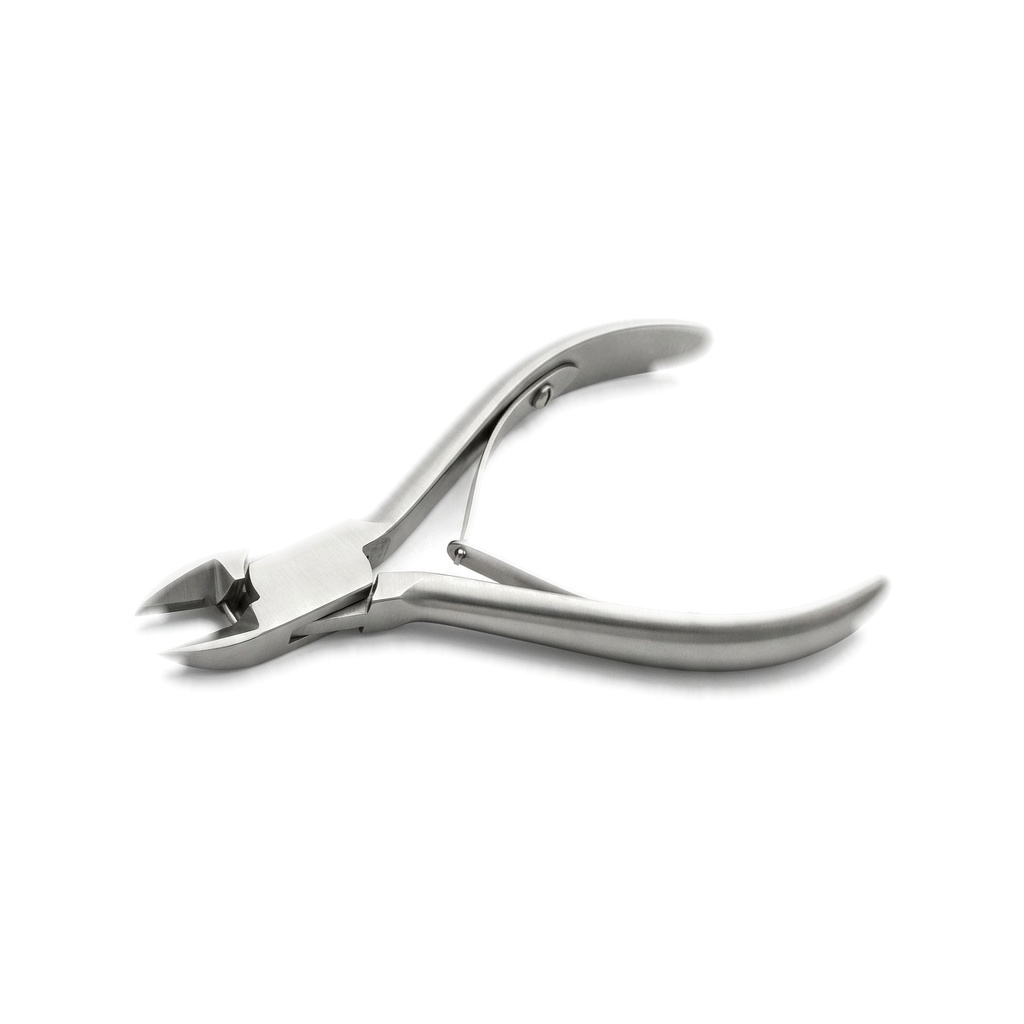
Distal End Cutter, Safety Hold
SKU: DOC-200A heavy-duty cutter for trimming the distal ends of archwires flush with the molar tube, right inside the patient's mouth. Its safety-hold design grips the cut-off piece of wire as it is severed, so the fragment cannot drop into the mouth or be inhaled. The cutting edges are forged tool steel with tungsten carbide for clean cuts through orthodontic wires without fraying. At 135 mm it stays compact for posterior access and autoclaves at 134°C.
DOC-200 | 135 mm | Forged tool steel / TC | Sterilisation: Steam autoclave 134°C
Variants: Variants & sub-products: Mini Distal End Cutter Pattern — A smaller head and shorter handles for young patients and tight posterior access. · Flush-Cut Distal End Cutter, Long Handle — Extra handle length for leverage on heavier wires, cutting perfectly flush to the tube.
Range 3 — Orthodontic, Endodontic & Restorative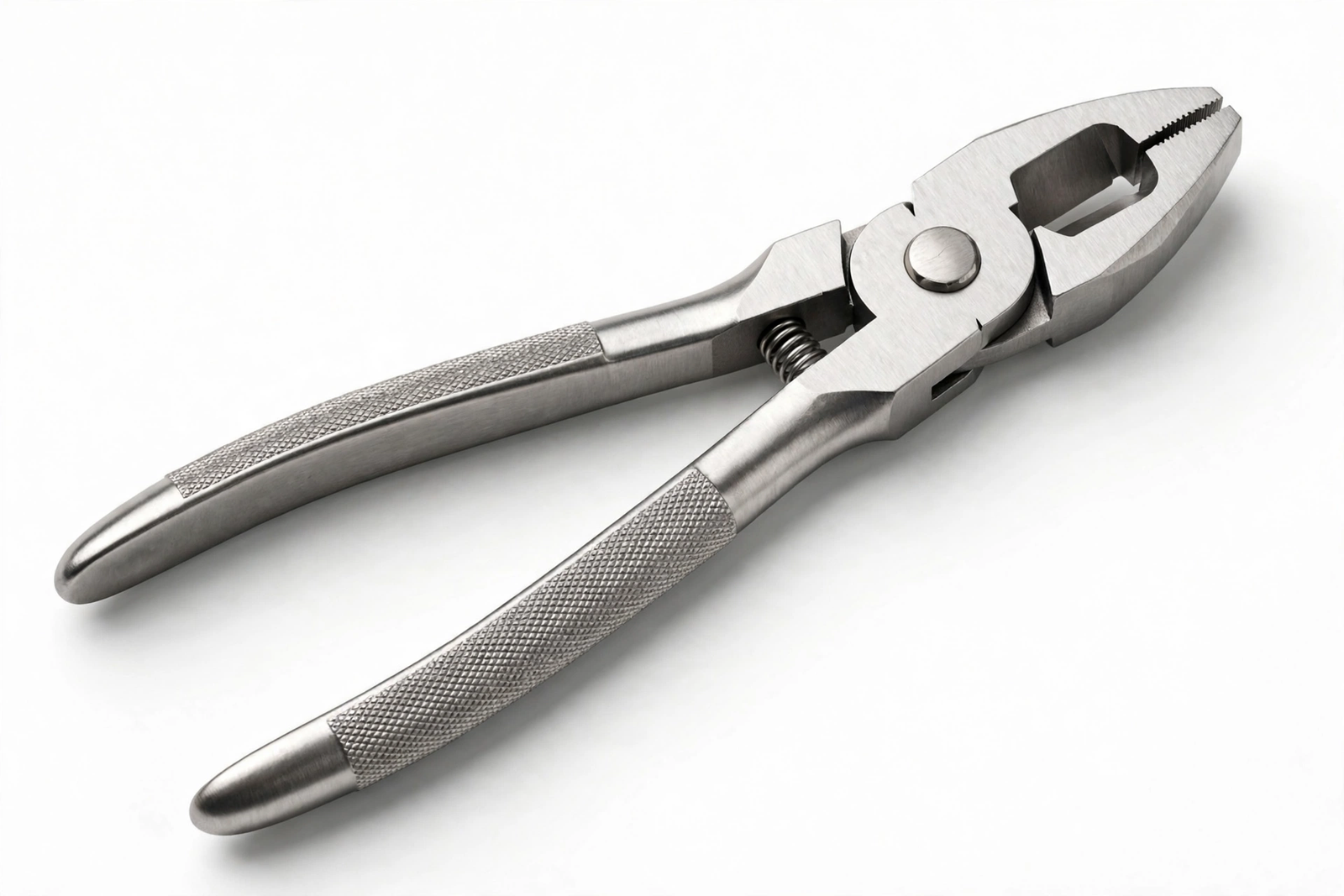
Hard-Wire Cutters
Medentra Global rangeHeavy-duty cutters built for the thicker stainless wires used in orthodontic and laboratory work, where a light ligature cutter would notch or spring. The cutting edges are hardened and, in the TC option, carbide-faced, so the cut stays clean and square instead of crushing the wire end. Long handles give the leverage that heavier gauges demand without excessive hand force.
420/440 stainless steel, tungsten-carbide cutting-edge option · satin passivated finish · autoclavable to 134°C · MOQ 50 units/SKU.
Range 3 — Orthodontic, Endodontic & Restorative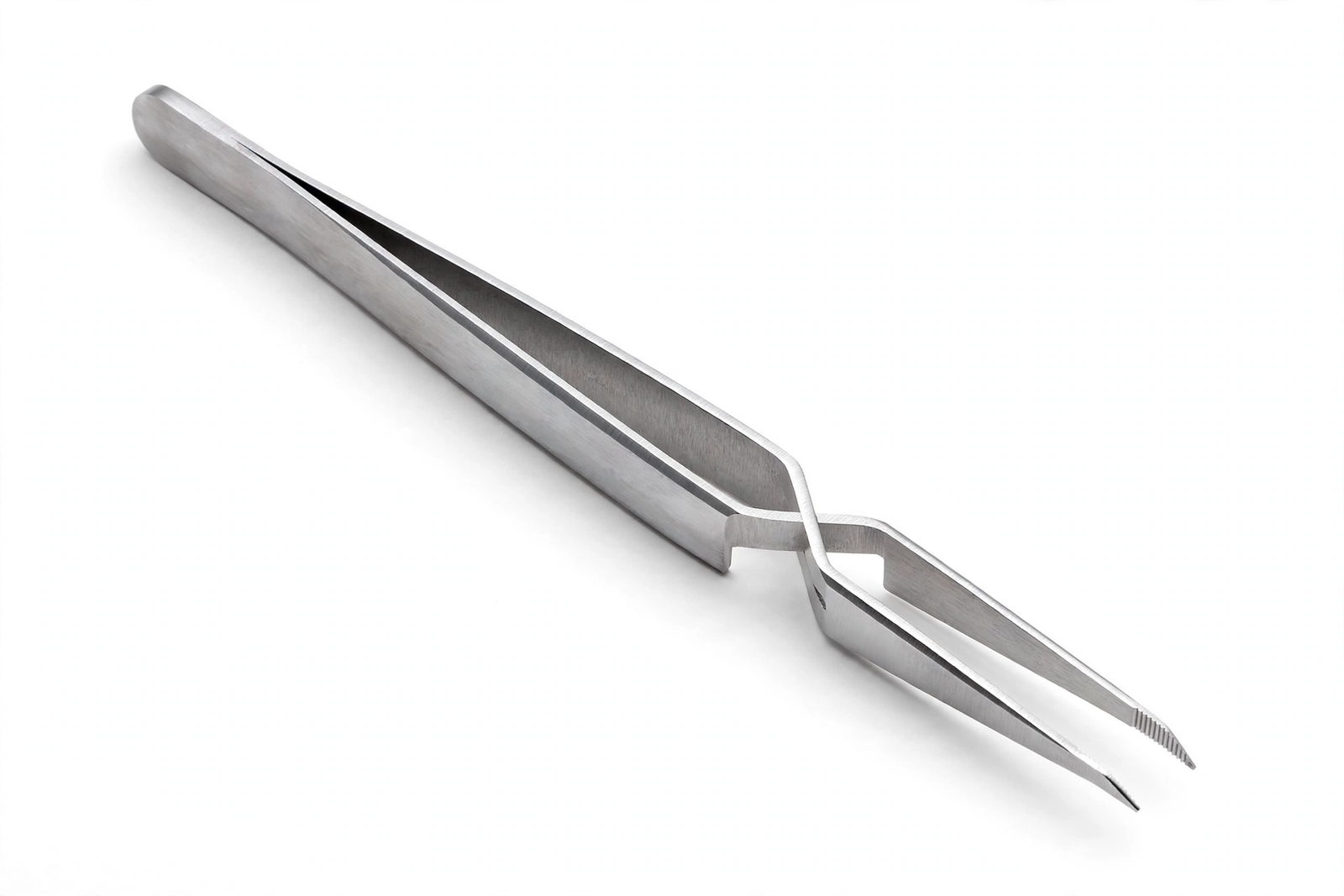
Bracket Tweezers & Gauges
Medentra Global rangeReverse-action tweezers that grip a bracket securely and release it the moment finger pressure eases, paired with positioning gauges that set bracket height consistently from the incisal edge. Together they are the accuracy tools of direct bonding: the tweezer holds the bracket in the orientation the gauge has just measured, so placement is repeatable tooth after tooth.
420/440 stainless steel · satin passivated finish · autoclavable to 134°C · MOQ 50 units/SKU.
Range 3 — Orthodontic, Endodontic & RestorativeEndodontic Instruments
Hand instruments for root-canal preparation, cleaning and obturation support. MOQ: 50 units / SKU.
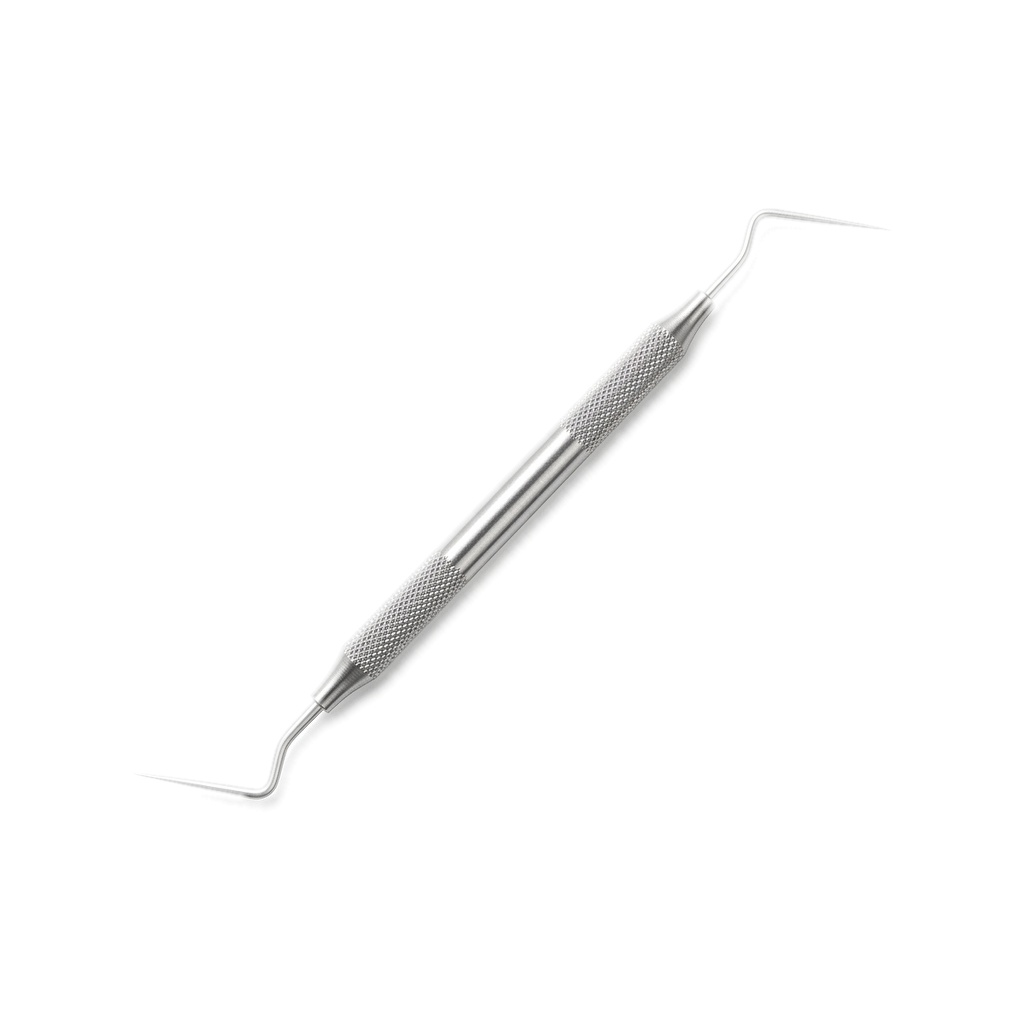
DG-16 Endodontic Explorer
SKU: DEX-160A long, double-ended endodontic explorer whose sharp, contra-angled points are made to search the floor of the pulp chamber for canal openings. The extended reach and fine tips let the operator feel the small catches and grooves that mark canal orifices, even in molars. High-tensile steel keeps the long points springy and accurate rather than soft. At 170 mm it is balanced for microscope and loupes work and autoclaves at 134°C.
DEX-160 | 170 mm | High-tensile steel | Sterilisation: Steam autoclave 134°C
Range 3 — Orthodontic, Endodontic & Restorative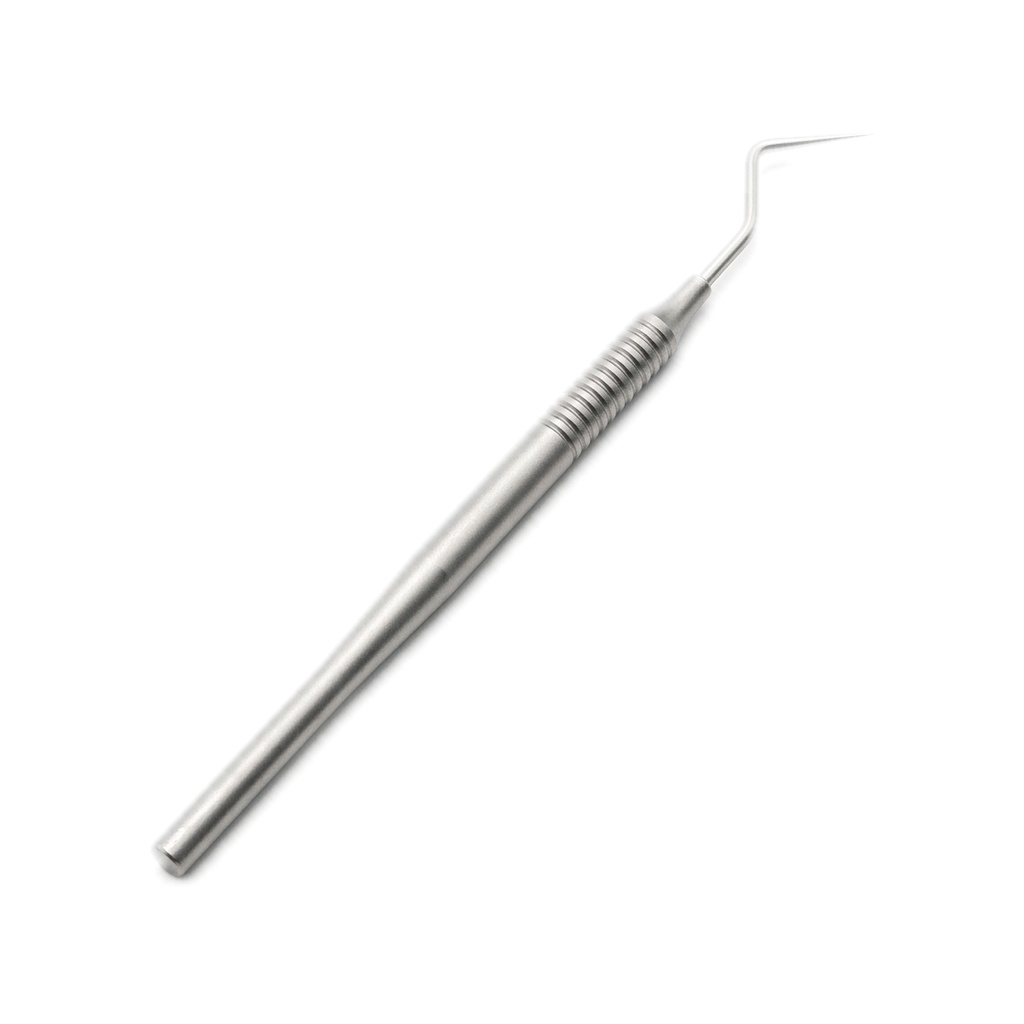
Root Canal Finger Spreader / Plugger
SKU: DES-180A finger-held endodontic instrument with a smooth, tapered point used to condense gutta-percha laterally during root canal filling. The fine cone creates space beside the master cone so accessory cones can be added for a dense, well-sealed obturation. Flexible stainless steel gives the tip controlled spring without ledging the canal wall. Supplied at 160 mm overall for finger use, it is steam autoclavable at 134°C.
DES-180 | 160 mm | Flexible stainless steel | Sterilisation: Steam autoclave 134°C
Variants: Variants & sub-products: Hand Spreader Pattern — The same condensing action on a longer instrument handle, preferred by operators who do not use finger-held instruments. · Finger Plugger Pattern — A blunt, flat-ended counterpart used to compress gutta-percha vertically rather than laterally.
Range 3 — Orthodontic, Endodontic & Restorative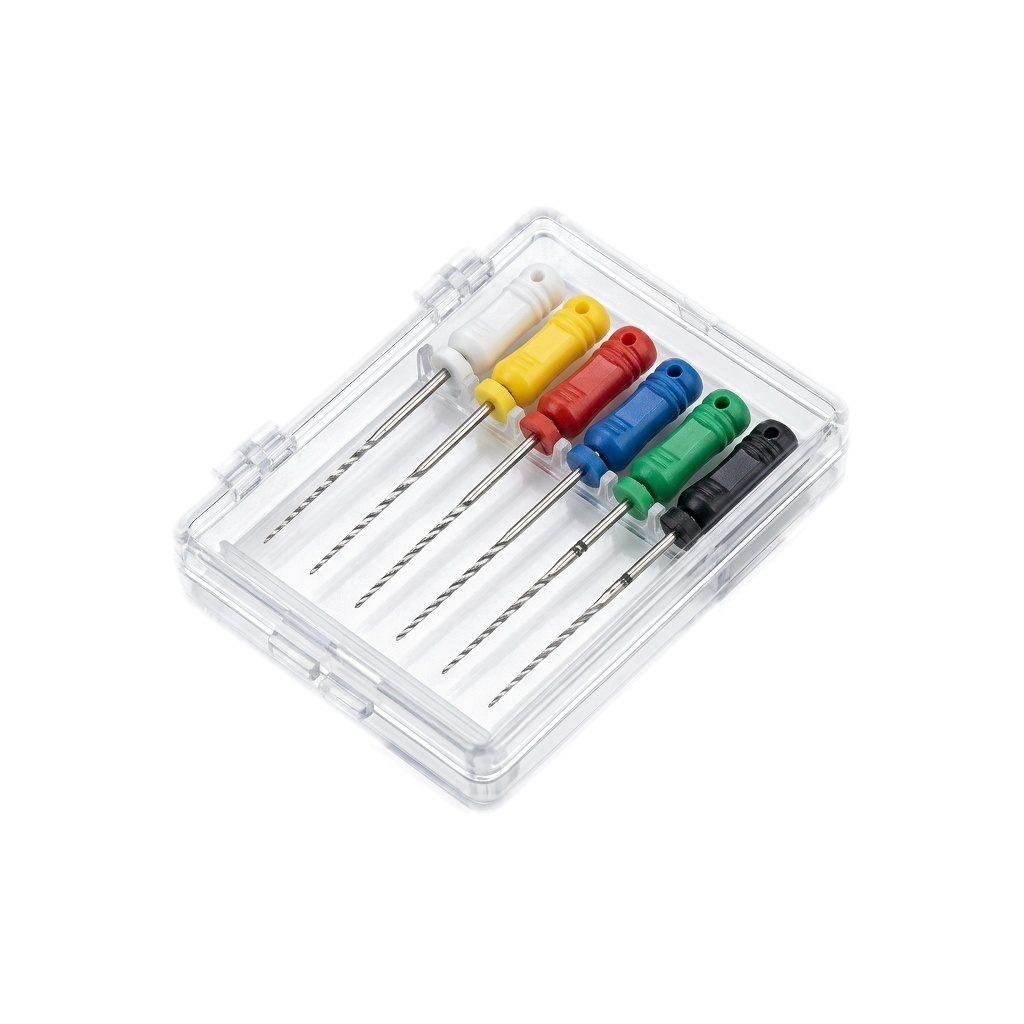
Endodontic K-Files 21mm #15–40, Assorted Box of 6
SKU: EKF-210A box of six stainless steel hand K-files in the assorted sizes #15 through #40, for cleaning, shaping and enlarging root canals by hand. K-files are worked with a watch-winding and filing motion, and their tightly twisted flutes cut dentine efficiently while clearing debris from the canal. Each file carries a colour-coded handle following the standard size colours, with endo stops for working-length control. The files are 21 mm in surgical stainless steel and are reprocessed by steam autoclave at 134°C.
EKF-210 | 21 mm (#15–#40) | Surgical stainless steel | Sterilisation: Steam autoclave 134°C
Variants: Variants & sub-products: K-File Size #15 (white) — The fine starter size for narrow canals and initial negotiation after a pathfinder file. · K-File Size #20 (yellow) — An early enlargement size used as the canal begins to open. · K-File Size #25 (red) — A mid-sequence size commonly reached in average-width canals. · K-File Size #30 (blue) — Continues apical shaping in medium and wider canals. · K-File Size #35 (green) — For canals that need shaping beyond the standard preparation sizes. · K-File Size #40 (black) — The largest size in this assorted set, for wide canals and final shaping. · The same K-file range is also commonly supplied in 25 mm and 31 mm lengths for longer roots; lengths are referred to by size only, with no separate codes listed here.
Range 3 — Orthodontic, Endodontic & Restorative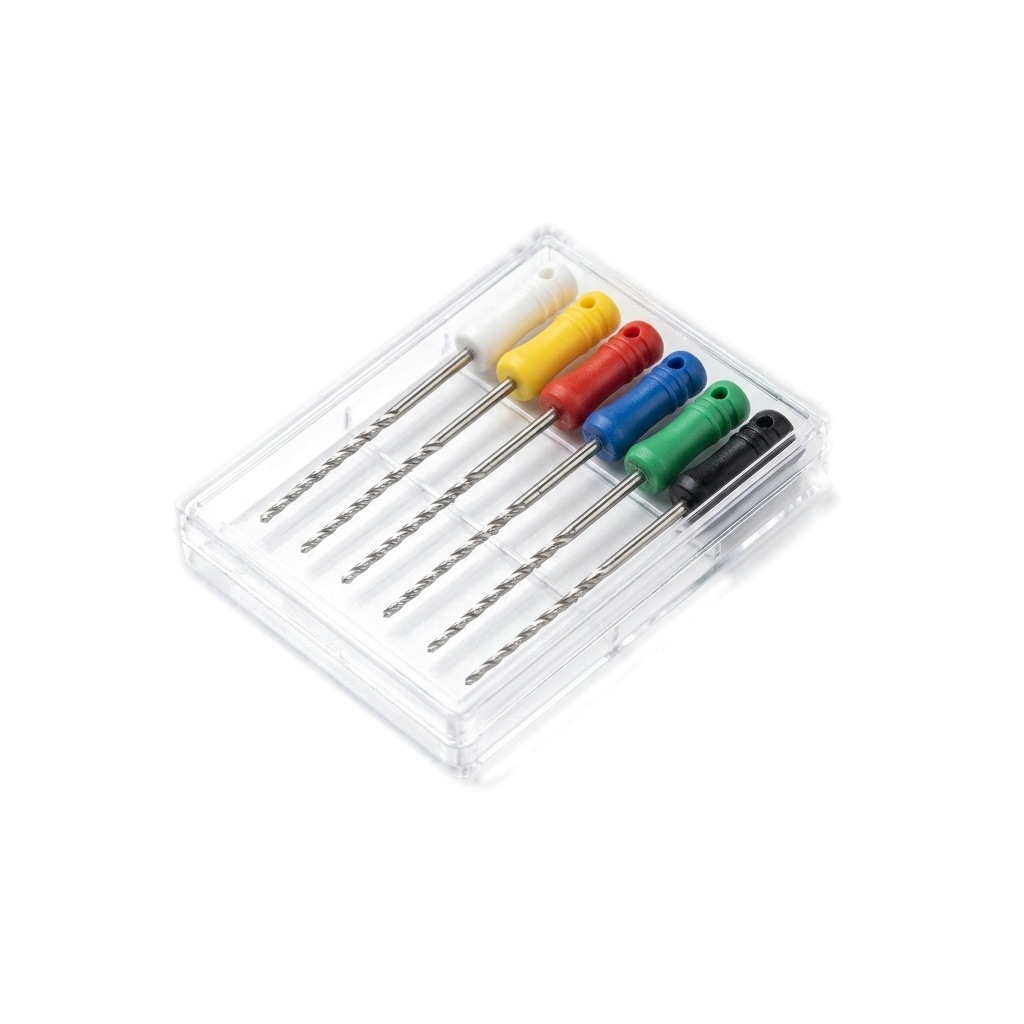
Endodontic Reamers 21mm #15–40, Assorted Box of 6
SKU: EKR-210A box of six stainless steel hand reamers in sizes #15 to #40, used with a rotating action to enlarge and clean root canals. Reamers have more widely spaced, open flutes than K-files, so they cut on rotation and carry dentine chips out of the canal quickly. Colour-coded handles follow the standard size sequence, with stops for working-length control. At 21 mm in surgical stainless steel, they are steam autoclavable at 134°C.
EKR-210 | 21 mm (#15–#40) | Surgical stainless steel | Sterilisation: Steam autoclave 134°C
Variants: Variants & sub-products: Reamer Size #15 (white) — The entry size for starting rotational enlargement in fine canals. · Reamer Size #20 (yellow) — Follows the #15 to develop the canal shape. · Reamer Size #25 (red) — A mid-range size for average canals. · Reamer Size #30 (blue) — Continues shaping in wider canals. · Reamer Size #35 (green) — For canals prepared to larger apical sizes. · Reamer Size #40 (black) — The largest reamer in this assorted set, for wide canals. · As with the K-files above, 25 mm and 31 mm lengths are the other standard options for this family; they are referred to by size/length only, with no separate codes listed here.
Range 3 — Orthodontic, Endodontic & Restorative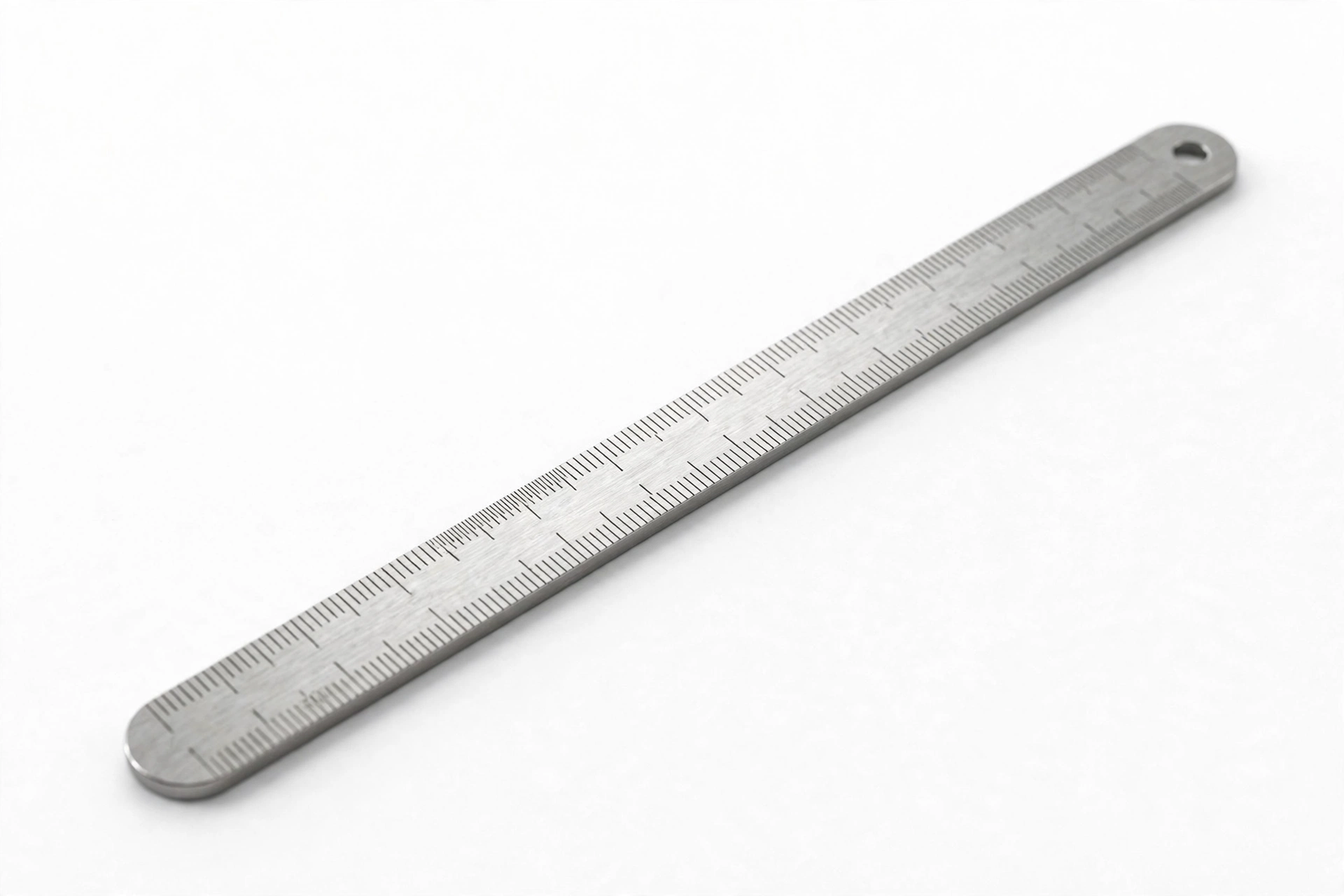
Endo Rulers & Gauges
Medentra Global rangeMeasuring rulers and gauges for working-length control — the reference against which stops are set on files and gutta-percha points are checked before they go into the canal. Clear, wear-resistant markings matter here because a faded ruler quietly becomes a measurement error, so the graduations are finished to stay legible after repeated sterilisation.
420/440 stainless steel (rulers/gauges) · satin passivated finish with clear graduations · autoclavable to 134°C · MOQ 50 units/SKU.
Range 3 — Orthodontic, Endodontic & Restorative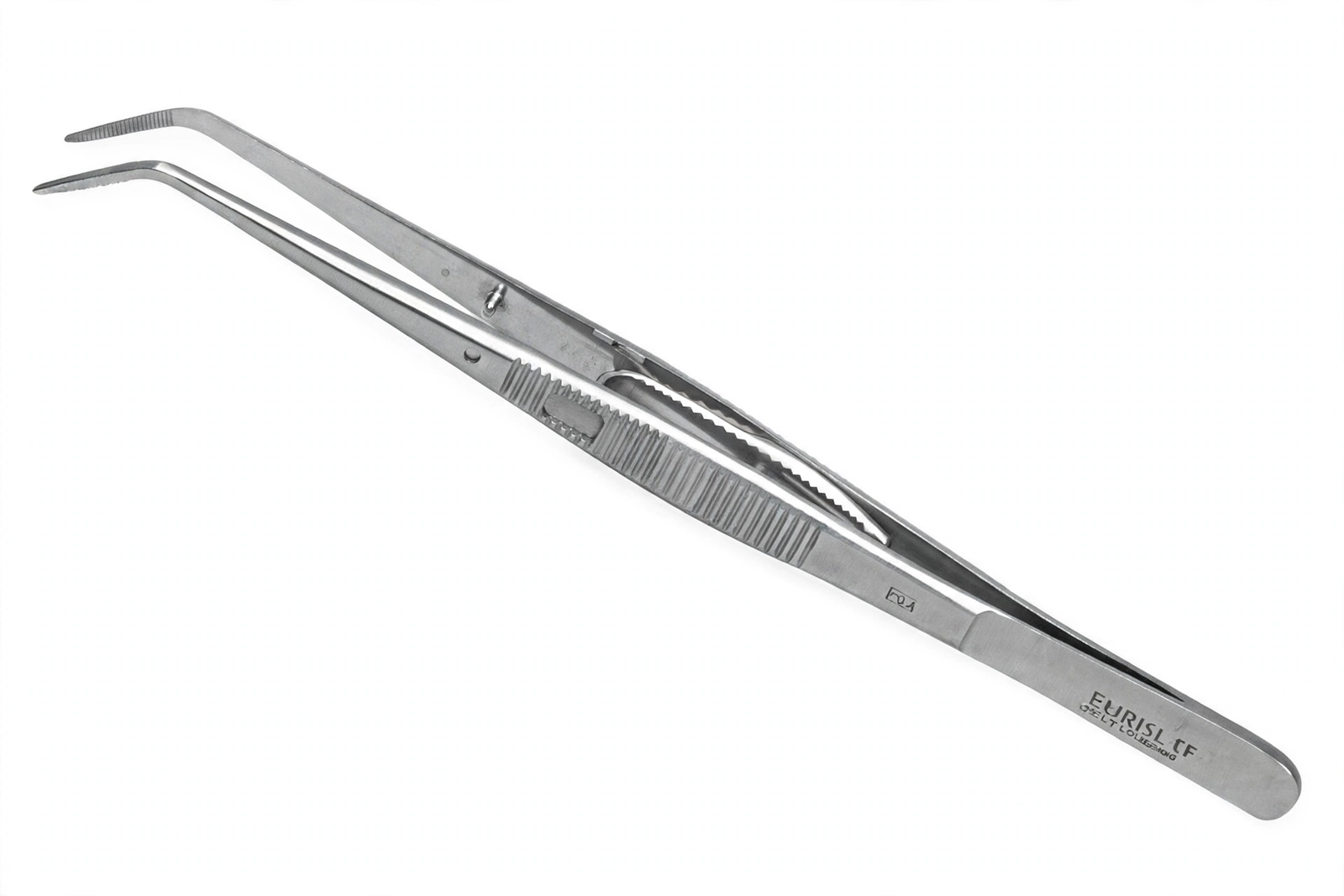
Locking Tweezers
Medentra Global rangeSelf-locking tweezers that close on paper points, gutta-percha cones and cotton pellets and stay closed without continuous finger pressure, so fine endodontic materials can be carried to the canal and released precisely where intended. The lock releases with a light squeeze, which keeps the motion small and controlled at the access cavity.
420/440 stainless steel · satin passivated finish · autoclavable to 134°C · MOQ 50 units/SKU.
Range 3 — Orthodontic,Endodontic & RestorativeRestorative Instruments
Placement, carving and finishing instruments for composite and amalgam restorations. MOQ: 50 units / SKU.
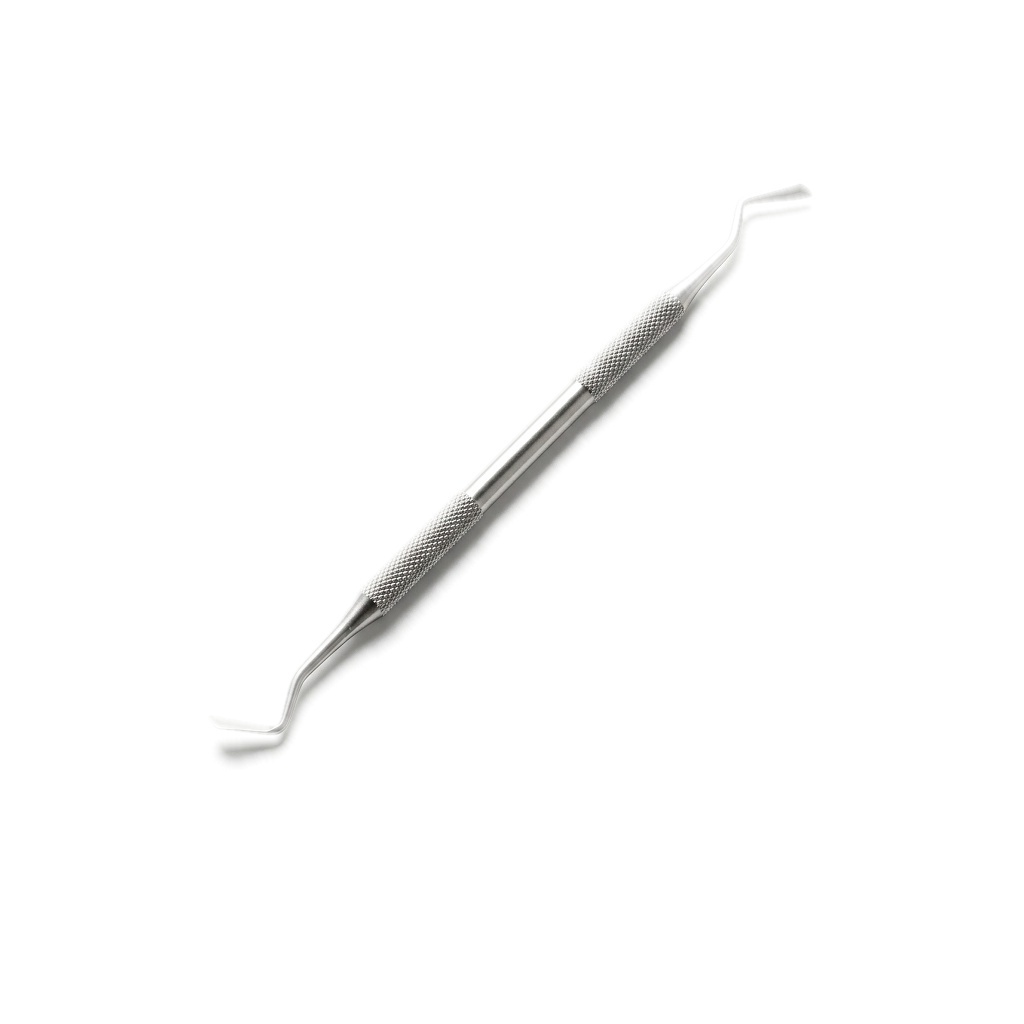
Composite Filling Instrument & Carver (Heidemann)
SKU: DCR-201A double-ended Heidemann-type instrument for placing and shaping composite restorations. The two flexible, flat paddle ends spread and model composite without dragging it, and the polished, mirror-like finish helps the material release cleanly instead of sticking. It covers the common placement and contouring steps for Class I to V restorations in one instrument. At 170 mm in AISI 420 high-carbon steel, it is light, precise and autoclavable at 134°C.
DCR-201 | 170 mm | AISI 420 high-carbon steel | Sterilisation: Steam autoclave 134°C
Variants: Variants & sub-products: Goldstein-Style Composite Instrument Pattern — Finer, more delicate paddles for anterior aesthetic layering work. · Anti-Stick Coated Composite Instrument Pattern — A dark, coated working end that composite releases from even more readily, speeding up placement.
Range 3 — Orthodontic, Endodontic & Restorative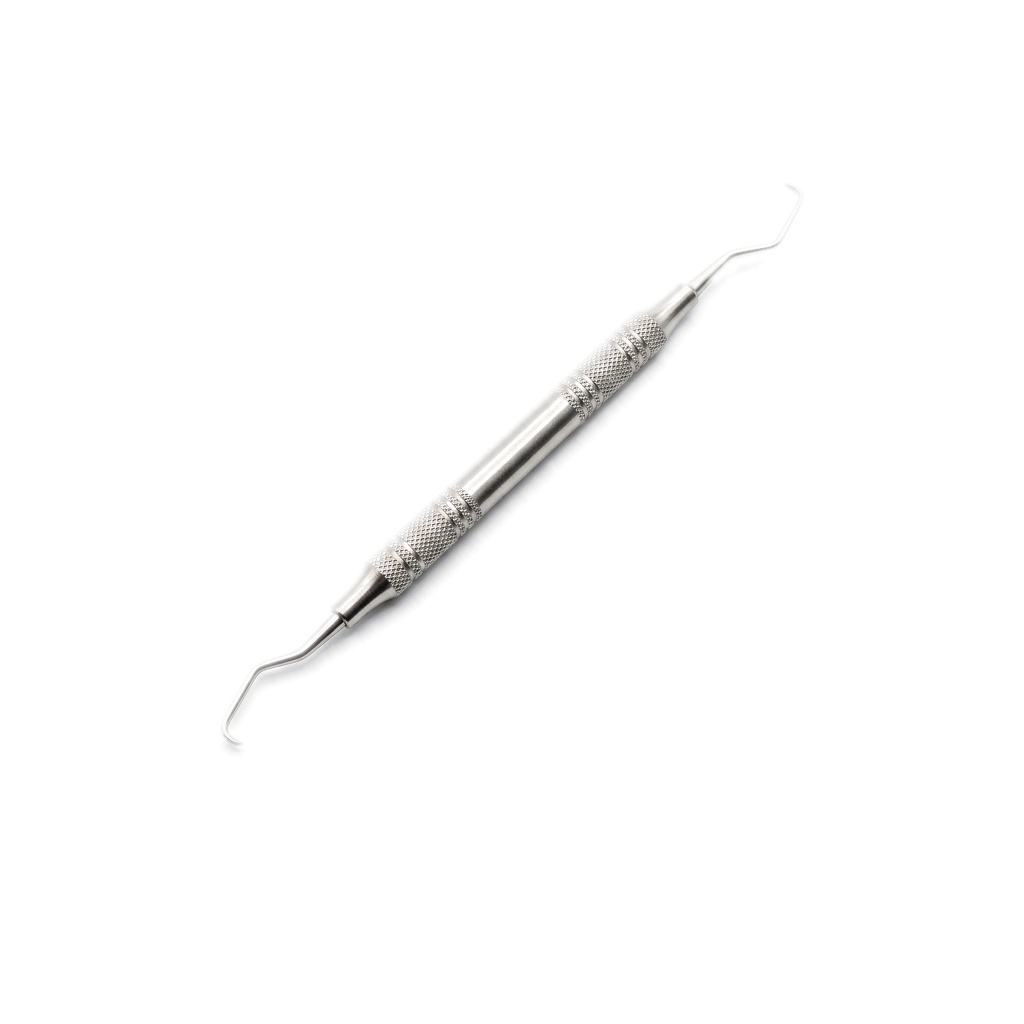
Spoon Excavator & Operative Carver
SKU: DEX-202A double-ended excavator with small, sharp spoon-shaped blades for scooping softened, carious dentine out of a cavity by hand. Hand excavation gives the operator tactile feedback that rotary instruments cannot, which is why spoon excavators remain central to atraumatic and conservative dentistry. The contra-angled shanks keep the spoons aligned with the cavity floor in posterior teeth. Made from tempered surgical steel at 165 mm, it is also handy for lifting out temporary restorations, and it autoclaves at 134°C.
DEX-202 | 165 mm | Tempered surgical steel | Sterilisation: Steam autoclave 134°C
Variants: Variants & sub-products: Excavator Pattern, Small Spoon — A narrower spoon for small cavities, fissure caries and children's teeth. · Excavator Pattern, Large Spoon — A wider spoon that clears bulk caries from large cavities in fewer strokes.
Range 3 — Orthodontic, Endodontic & Restorative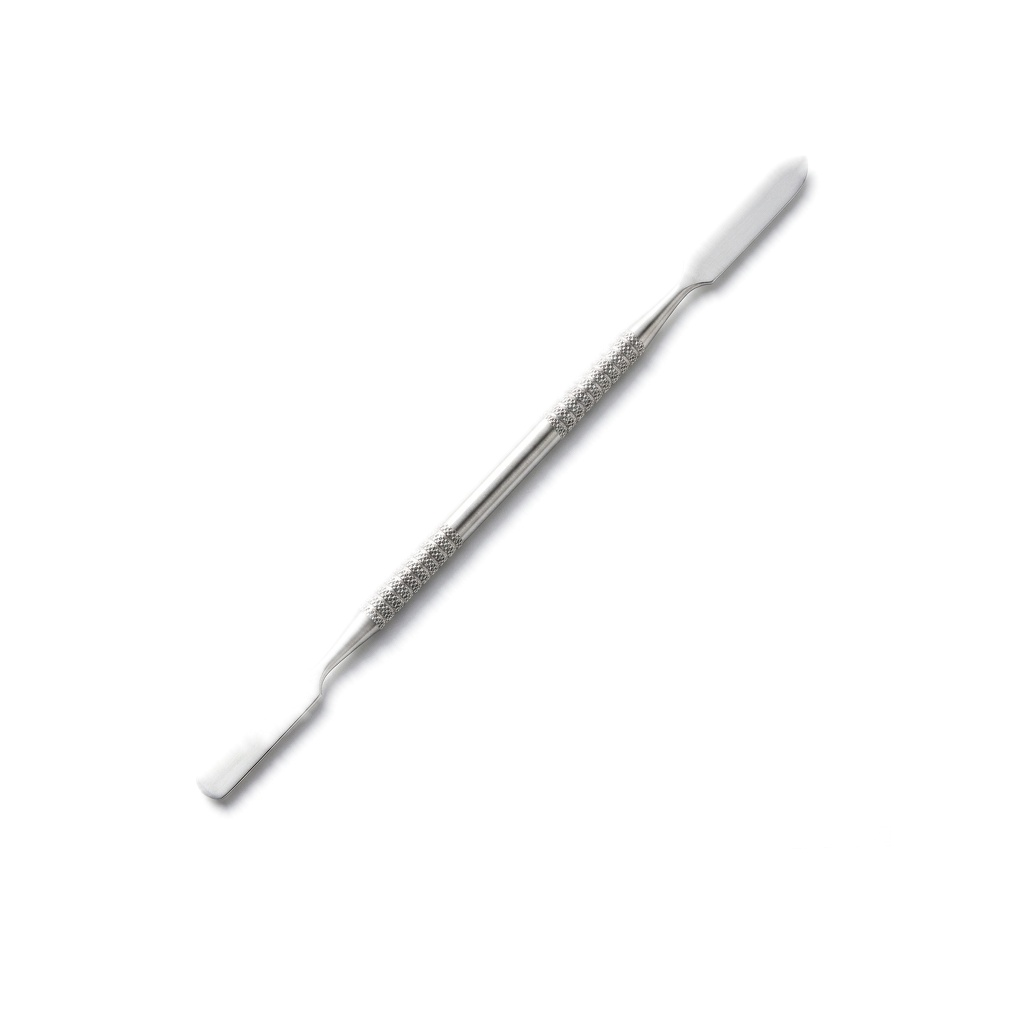
Cement & Lab Spatula, Double-Ended
SKU: DCS-205An all-metal, double-ended spatula that mixes dental cements on a slab and doubles as a general laboratory spatula. One end is a flexible paddle for folding powders into liquids such as zinc phosphate and glass ionomer; the other is a straighter spatula for wax and general bench work. Being all AISI 304 stainless steel, there is no handle to degrade, and set cement cleans off the metal easily. It is 185 mm long and fully autoclavable at 134°C.
DCS-205 | 185 mm | AISI 304 stainless steel | Sterilisation: Steam autoclave 134°C
Range 3 — Orthodontic, Endodontic & Restorative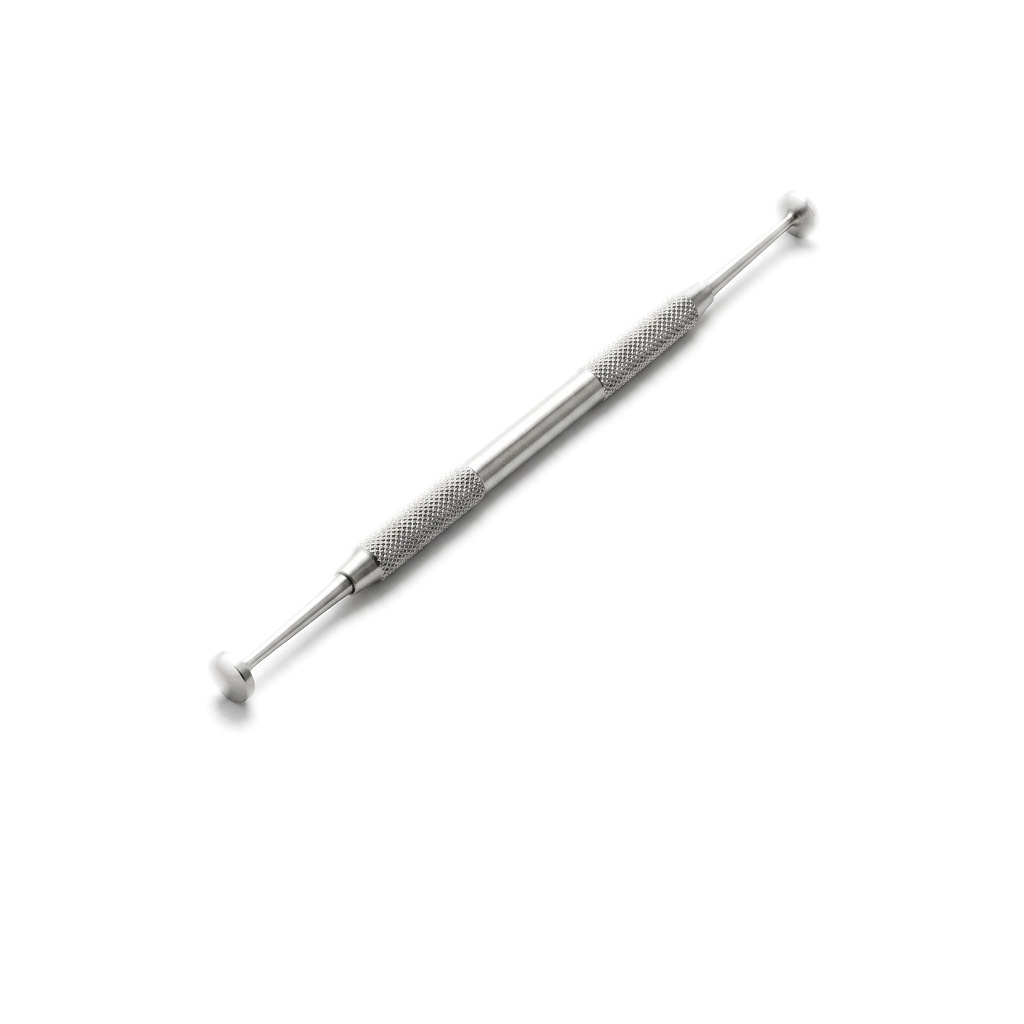
Amalgam Condenser / Plugger (Black's)
SKU: DAC-210A double-ended condenser for packing amalgam firmly into a prepared cavity, with flat circular faces of 1.8 mm and 2.5 mm to suit different cavity widths. Dense, well-condensed amalgam is stronger and adapts better to cavity walls, and the flat faces of this plugger are made to deliver that pressure evenly. The same ends are also used to compact bases and other filling materials. Made from AISI 420 steel at 170 mm, it is steam autoclavable at 134°C.
DAC-210 | 170 mm | AISI 420 steel | Sterilisation: Steam autoclave 134°C
Variants: Variants & sub-products: Condenser Pattern, Fine Faces — Smaller face diameters for narrow cavity preparations and children's restorations. · Condenser Pattern, Serrated Faces — Lightly textured faces that grip the amalgam increment and reduce slipping during packing.
Range 3 — Orthodontic, Endodontic & Restorative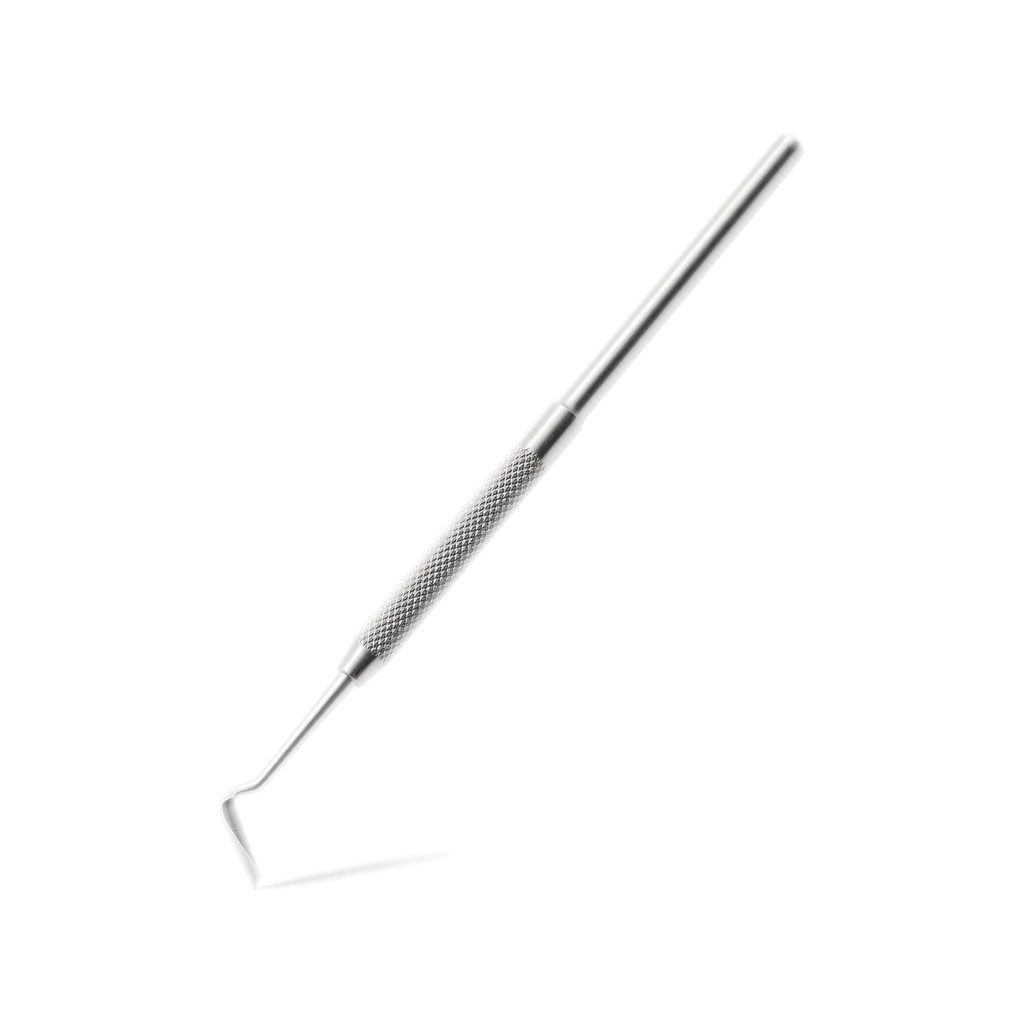
Gingival Margin Trimmer & Enamel Chisel
SKU: DMT-220A hand cutting instrument for the finishing stage of cavity preparation — planing enamel rods and bevelling the cervical (gingival) margins of a box preparation. The contra-angled, bevelled blade works with a controlled push or pull cut, giving smooth margins that restorations can seal against. High-carbon steel takes and keeps a very keen edge, which is essential for clean enamel cutting. At 160 mm it is precise in the hand and autoclaves at 134°C.
DMT-220 | 160 mm | High-carbon steel | Sterilisation: Steam autoclave 134°C
Variants: Variants & sub-products: Margin Trimmer, Mesial Pattern — The blade angled for margins on the mesial side of the preparation; margin trimmers are conventionally made in mesial/distal pairs. · Margin Trimmer, Distal Pattern — The opposite angle, for distal margins, completing the working pair. · Straight Enamel Chisel Pattern — An unbevelled, straight-blade chisel for cleaving enamel and shaping cavity walls in anterior teeth.
Range 3 — Orthodontic, Endodontic & Restorative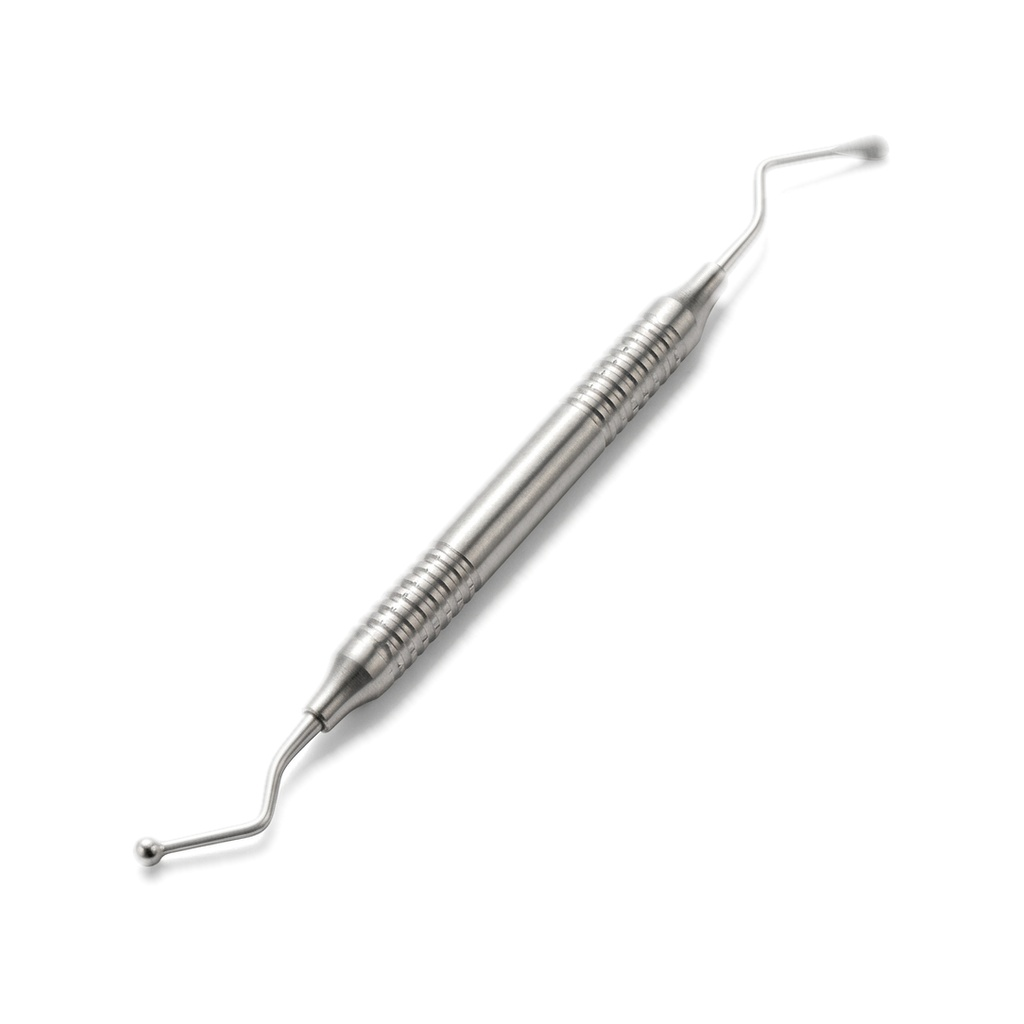
Ball Burnisher & Beaver-Tail Instrument
SKU: DBB-215A double-ended finishing instrument that combines a polished ball burnisher on one end with a flat beaver-tail blade on the other. The ball end adapts metal matrices and smooths amalgam margins, while the beaver-tail shapes and grooves composite and amalgam on occlusal surfaces. Both ends are highly polished so materials are finished, not scratched. Made from AISI 420 martensitic steel at 170 mm, it is autoclavable at 134°C.
DBB-215 | 170 mm | AISI 420 martensitic steel | Sterilisation: Steam autoclave 134°C
Variants: Variants & sub-products: Egg-Shaped Burnisher Pattern — A larger, oval burnisher for broad occlusal anatomy and larger restorations. · Ball Burnisher Pattern, Large Ball — A bigger ball diameter for adapting wide bands and burnishing extensive margins.
Range 3 — Orthodontic, Endodontic & Restorative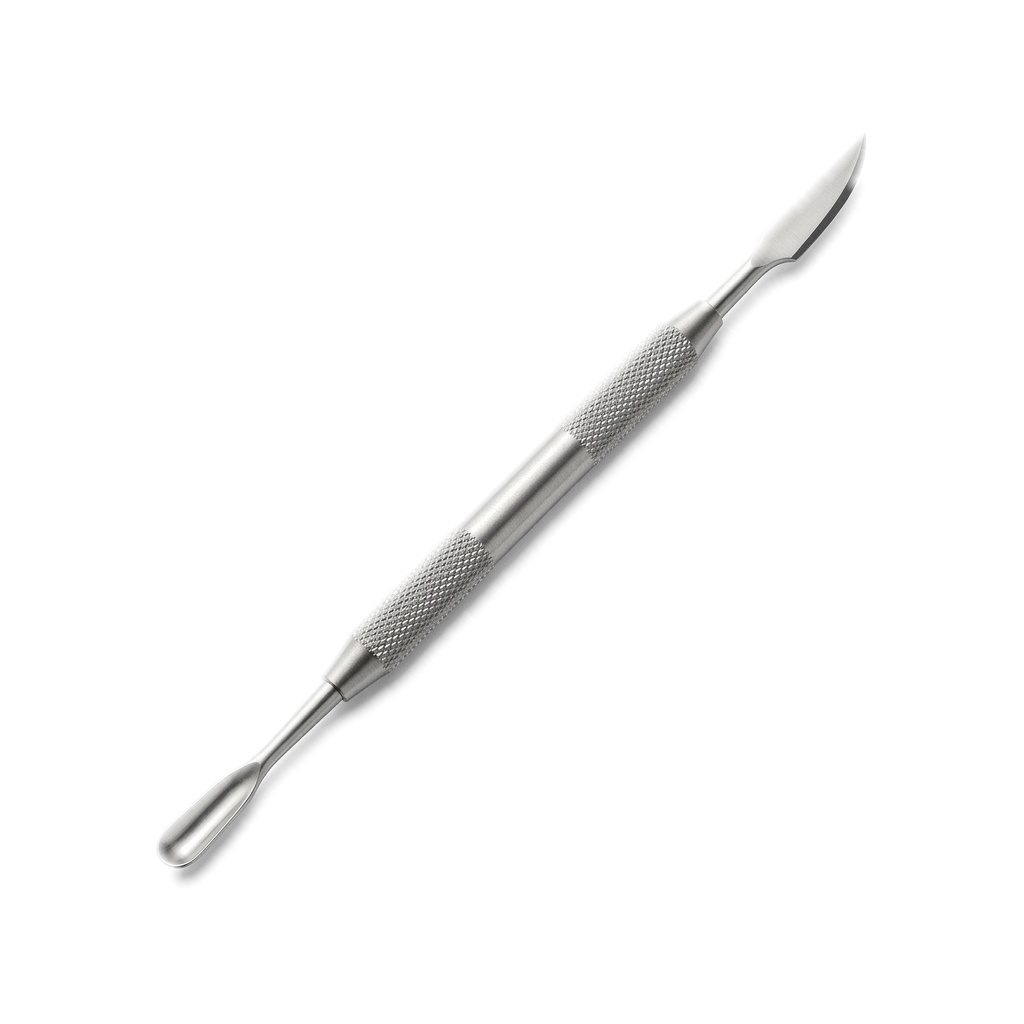
LeCron Wax Carver & Modeler
SKU: DWC-110The laboratory's classic wax-working tool, with a sharp, curved knife blade at one end for cutting and contouring wax and a small spoon at the other for adding and shaping it. Crown and bridge technicians use it to carve margins, fossae and anatomy into wax patterns before casting. The blade holds a fine edge in AISI 420 stainless steel, and the 170 mm body balances like a pen for detailed work. It is a bench instrument for prosthetic and crown-and-bridge laboratories and cleans down easily between jobs.
DWC-110 | 170 mm | AISI 420 stainless steel | Sterilisation: Steam autoclave 134°C
Variants: Variants & sub-products: Wax Knife Pattern (large blade) — A bigger, sturdier blade for cutting wax slabs, sprues and denture wax work. · Waxing Instrument Set Pattern (P.K. Thomas type) — A matched set of fine waxing tips for building up detailed occlusal anatomy in inlay and crown work.
Range 3 — Orthodontic, Endodontic & Restorative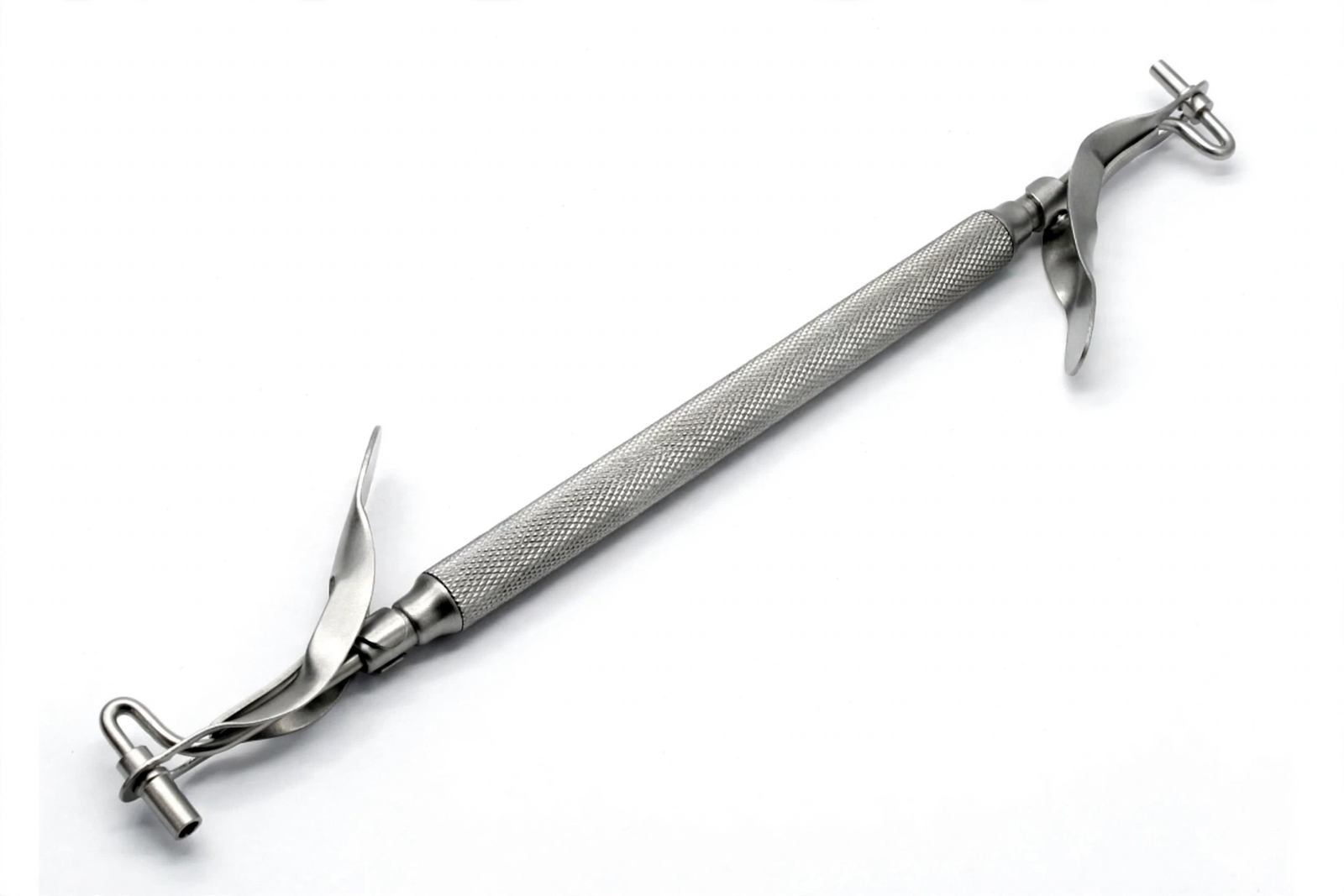
Amalgam Carriers
Medentra Global rangeSingle and double-ended carriers that pick up a measured increment of mixed amalgam from the well and deliver it into the prepared cavity without spillage or premature setting delays. The plunger action is smooth and positive so the increment releases fully into the cavity base, ready for condensation, and the barrel sizes cover the usual range from small occlusal increments to larger build-ups.
420/440 stainless steel · satin passivated finish · autoclavable to 134°C · MOQ 50 units/SKU.
Range 3 — Orthodontic, Endodontic & Restorative